

Cape Town, don’t be a pain in the drain!
27 August 2026
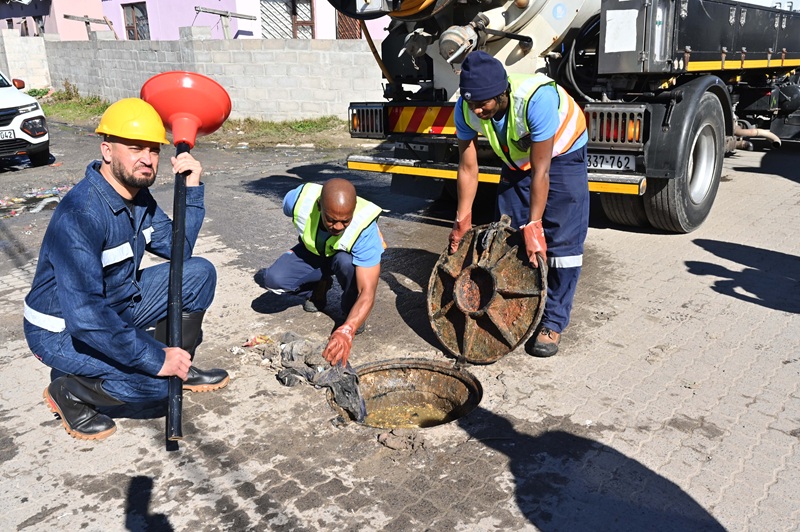
About 90 000 sewer blockages were cleared across Cape Town in just one year, placing a significant burden on the City’s resources and highlighting the ongoing challenge of keeping the city’s sewer system flowing.
During the 2025/26 financial year, maintenance teams attended to 90 002 sewer blockages. This is an increase of 2 000 blockages compared to the previous year. In response to the growing challenge, the City’s Water and Sanitation Directorate has launched its city-wide ‘Don’t Be a Pain in the Drain’ campaign.
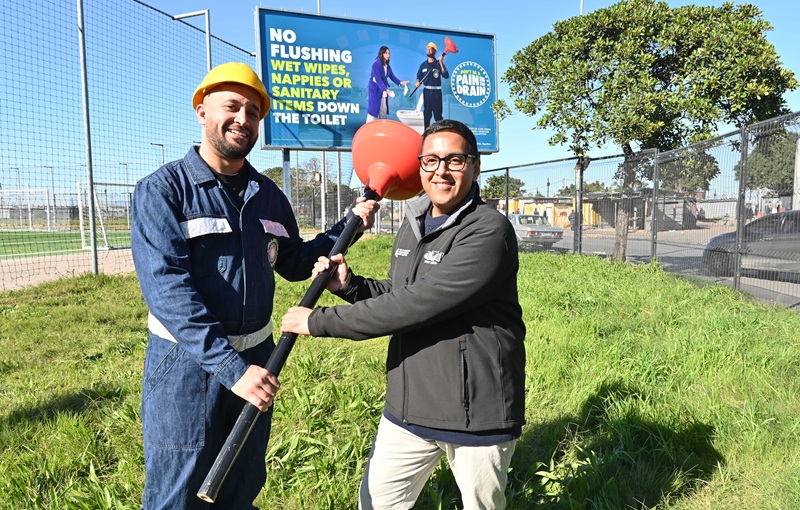
The multi-faceted awareness campaign includes a series of videos, billboards, radio and newspaper advertisements, featuring the City's new friendly neighbourhood hero, Drainman, who shows up just in time to highlight everyday behaviours by residents that can lead to sewer blockages. The campaign also raises awareness about the dangers of building informal structures over City manholes and sewer pipes; and how illegal stormwater-to-sewer connections flood the sewer system.
Residents
are encouraged to take responsibility for what they flush down their toilets
and drains.
The campaign highlights a simple rule to always remember: only the three Ps should be flushed – pee, poo and (toilet) paper.
‘Even though our sewer infrastructure is out of sight and often out of mind, what happens in the sewer system has a very real impact on the streets and spaces in our communities. We all have a role to play in preventing blockages and sewer overflows,’ said Alderman Zahid Badroodien, Mayoral Committee Member for Water and Sanitation.
A breakdown of the main drivers of sewer blockages includes:
- Rags, sanitary items and other foreign objects – 59 729 (66,3%)
- Fats – 11 678 (12,9%)
- Sand – 7 627 (8,4%)
- Roots – 7 443 (8,2%)
- Infrastructure collapses – 2 289 (2,5%)
- Building material – 1 236 (1,3%)
More than 80% of these blockages can be prevented and are directly caused by misuse of the sewer system and illegal dumping.
‘Every
time someone flushes or dumps wet wipes, rags, rubble, oil and other items that
don’t belong in the sewer, it places an enormous and unnecessary burden on the
City’s resources. It is especially frustrating when these incidents take place
repeatedly and the City is obligated to respond to a problem that could have
been avoided.
‘Toilets and manholes should not be used as dustbins. We need residents to assist us in reducing these costs by treating all components of the sewer system with care. Every act of misuse costs money that could be better spent on upgrading and improving infrastructure,’ said Alderman Badroodien.
Residents
can help prevent sewer blockages by remembering the following:
- Only flush the three Ps – pee, poo and toilet paper.
- Do not flush wet wipes, sanitary products, nappies, rags or other foreign objects.
- Never pour cooking oil, fats or grease down sinks and drains.
- Dispose of rubble and building materials responsibly and never dump them into manholes.
- Do not make illegal connections between stormwater systems and the sewer network
Watch the videos here:
- Builders’ rubble doesn’t belong in Cape Town’s sewers: https://www.youtube.com/watch?v=2TlvUeKQ99M
- Never pour oil down the drain: https://www.youtube.com/watch?v=f0VaP2CVh5Q
- Keep manholes clear: https://www.youtube.com/watch?v=dTkwz42tWgQ
- Don’t flush wet wipes: https://www.youtube.com/watch?v=b3AoLMPpXQ0
- Illegal stormwater-to-sewer connections overload the sewer system: https://www.youtube.com/watch?v=NOIcC9s7z3M
Caption 1: Alderman Zahid Badroodien, Mayoral Committee Member for Water and Sanitation, with Drainman at a billboard opposite Nyanga Station.
Caption 2: Drainman on site with the City’s Pinelands Depot team attending to a sewer blockage in Gugulethu.
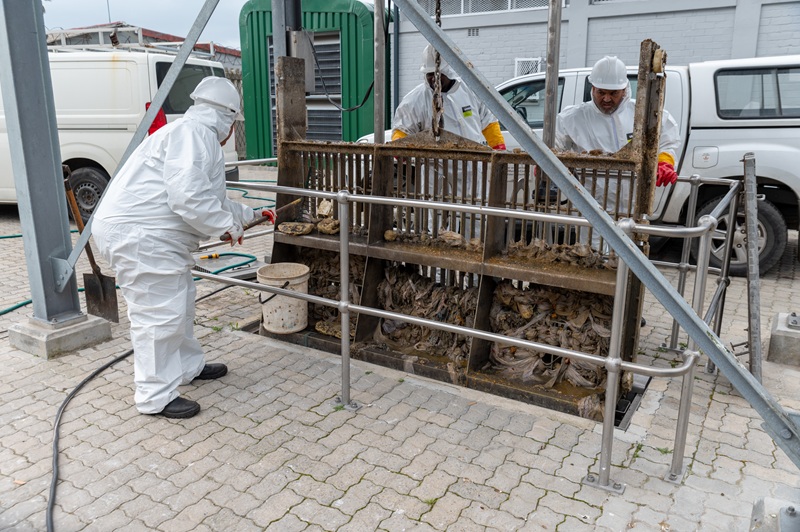
Caption 3: Pump station screens play a crucial role in trapping foreign objects that are incorrectly disposed of in the sewer system.
End