

City’s tree-planting programme grows, with 390 trees issued through Adopt-a-Tree
03 October 2026
The City’s annual tree-planting programme has seen more than 2 090 trees planted since April this year as part of the 2026 tree-planting season, with 390 of these trees issued through the Adopt-A-Tree Programme. A further 43 tree-planting projects are currently under way.
The City is celebrating the growing partnerships with residents, Friends groups, businesses and community organisations that are helping to create greener, better cared-for public spaces across Cape Town.
Last month, the City joined community members and local partners at Chiphillside Park in Retreat for a tree-planting initiative that demonstrates the value of partnerships in creating and caring for greener public spaces.
The Adopt-a-Tree Programme provides an opportunity to recognise the environmental, social and recreational value of trees in urban areas. Trees provide shade, support biodiversity, contribute to climate resilience and help create healthier and more attractive public spaces.
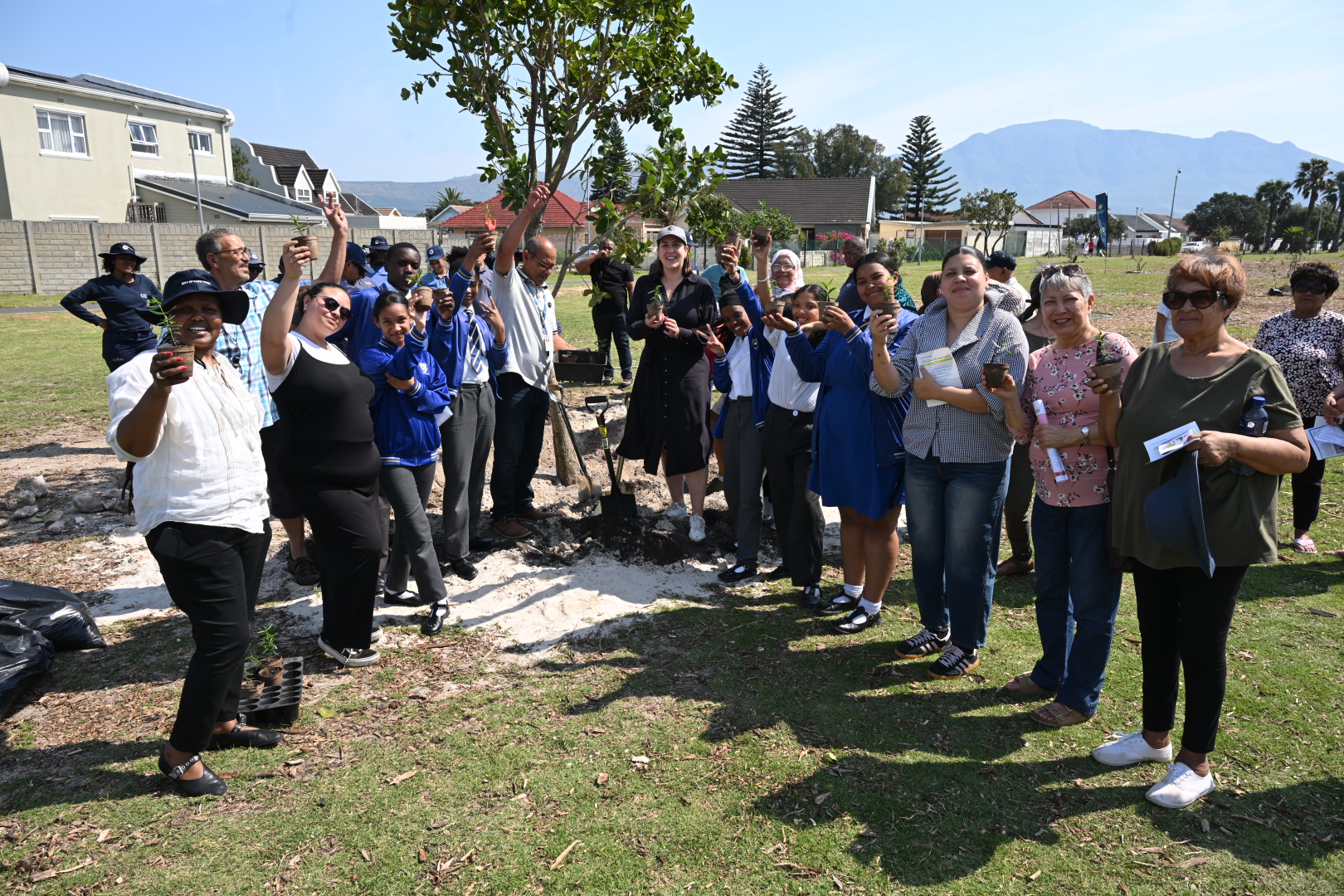
Caption: Councillor Francine Higham attending a tree planting event in Retreat
Launched in 2025, the City’s Adopt-a-Tree Programme, complements the City’s existing tree-planting initiatives by encouraging Friends groups, residents, businesses and community organisations to participate in urban greening and the ongoing care of trees on suitable City-owned land.
During the 2026 tree-planting season:
- More than 2 090 trees have been planted through the City’s broader annual tree-planting programme
- More than 390 trees have been issued through the Adopt-A-Tree programme
- 43 additional tree-planting projects are currently under way
The Adopt-A-Tree programme has received significant public interest, with applications requesting more than 1300 trees across the city. Several applications could not be supported because the requests were for planting on private properties, which fall outside the programme’s scope. All applications are subject to programme criteria and technical assessment, including consideration of site suitability and available nursery stock.
The programme has also highlighted strong interest in indigenous tree species. Species requested and planted include Milkwood, Wild Olive, Waterberry, Searsia pendulina, White Stinkwood, Wild Plum, Cape Ash and Tarchonanthus camphoratus.
Milkwood and Wild Olive have been among the most popular choices, reflecting community interest in indigenous species that are well suited to local conditions.
Chiphillside Park is an example of what can be achieved when communities take ownership of their public spaces.
Following a period of deterioration associated with the misuse of the park, members of the community initiated a tree-planting effort as part of their commitment to revitalising the space.
The Recreation and Parks Department supported these efforts, while residents have continued to identify opportunities to improve and beautify the park.
‘This tree-planting initiative demonstrates what is possible when residents, community organisations and the City work together. I want to thank all the residents and organisations across Cape Town who responded to our Adopt-a-Tree call this year, rolled up their sleeves and got involved in planting trees in their neighbourhoods. The 390 trees issued through Adopt-a-Tree demonstrate the growing appetite among communities to play an active role in greening and caring for their public spaces.
‘But planting the tree is only the beginning. These young trees now need to be watered, protected and cared for so that they can thrive and become a lasting part of our communities. This is about more than planting trees; it is about building a culture of community ownership and caring for our public spaces, and working together to leave our neighbourhoods greener for generations to come,’ said Mayoral Committee Member for Community Services and Health, Councillor Francine Higham.