

Monitoring of City’s marine outfalls continues, as latest results remain within permit standards
28 August 2026
The recent results shared at the Permit Advisory Forum meeting on Friday, 21 August show that water quality near the Camps Bay, Green Point and Hout Bay marine outfalls continues to largely meet the guidelines, aligned with the results in the past two years. This indicates that coastal water quality around the marine outfalls is generally stable and remains safe.
The monitoring forms part of the City’s ongoing programme to assess the condition of the marine environment around the three outfalls. The latest results are consistent with findings from the previous 24 months of monitoring, providing a continued picture of generally stable coastal water quality around the outfalls.
Between April and June 2026, the City collected 513 seawater samples. Of these, 98,6% met the guidelines for water quality. Seven samples recorded higher-than-allowed levels of enterococci, representing 1,4% of all samples tested.
Most of the exceedances were found close to the outlets of the marine outfalls. Only one was recorded outside the edge of the designated mixing zone, at a mid-shore monitoring site. Separate testing also found one instance of acute toxicity at a Camps Bay site in May.
‘These results are encouraging and demonstrate that our ongoing monitoring programme continues to provide valuable scientific insight into the condition of our coastal environment. While the findings show that water quality around the marine outfalls remains largely within guideline standards, we are not complacent. Protecting and improving the health of our marine environment remains a priority for the City, which is why we continue to invest in rigorous monitoring, transparent reporting, and evidence-based decision-making. At the same time, we are advancing the assessment of future treatment solutions, including the potential upgrade of the marine outfalls and the introduction of additional treatment processes, to ensure that our wastewater infrastructure remains resilient, environmentally responsible, and fit for generations to come,’ said the City’s Mayoral Committee Member for Water and Sanitation, Alderman Zahid Badroodien.
Effluent testing continues
The City continues to monitor effluent quality at the marine outfalls pump stations through its own laboratory as well as independent external laboratory testing. For the April to June 2026 quarter, the City’s grab-sample results recorded compliance with the current Coastal Water Discharge limits of 88,7% at Camps Bay, 86% at Green Point and 99,4% at Hout Bay, while the independent auditor’s composite-sample results recorded 97,9% compliance at Camps Bay, 97,2% at Green Point and 97,9% at Hout Bay.
Marine outfall refurbishment progressing
Medium term (2026 – 2028)
The City’s programme to refurbish and strengthen the three marine outfall systems is progressing. The refurbishment contract commenced on 14 January 2026, while a construction work permit covering all three outfall pump stations was issued on 16 April 2026. Equipment procurement is progressing, with delivery and installation of key mechanical and electrical equipment, including pumps, screens and washer compactors, expected in the coming weeks.
Long-term treatment options being assessed
In parallel with the refurbishment programme, the City is progressing its investigation into longer-term treatment solutions for the marine outfalls. The study has assessed 60 potential design options and narrowed these down to nine viable scenarios, with a multi-criteria decision-making tool being developed to identify the most feasible solution.
The long-term concept includes comprehensive biological treatment using activated sludge bioreactors and sludge management, followed by an advanced treatment train to address contaminants of emerging concern.
Scoping has been completed and the feasibility study is now approximately 85% complete, with the final feasibility report expected by the end of September 2026.
The implementation of any long-term solution will be dependent on the outcome of the feasibility study, environmental authorisations and available budget.
Monitoring expanded to more coastal facilities
The City has expanded its coastal monitoring programme to include five more wastewater treatment works (WWTW): Mitchells Plain, Simon’s Town, Millers Point, Llandudno and Oudekraal.
The expanded programme is intended to monitor environmental impacts associated with treated effluent discharges, assess compliance with recently issued Coastal Water Discharge Permits (CWDPs), and support the objective of releasing treated effluent to receiving water bodies in a way that avoids environmental harm and risks to human health.
The National Department of Forestry, Fisheries and Environment has issued these Coastal Water Discharge Permits: the Mitchells Plain permit on 29 June 2026, the Simons Town permit on 7 April 2026, and the Oudekraal permit on 17 August 2026.
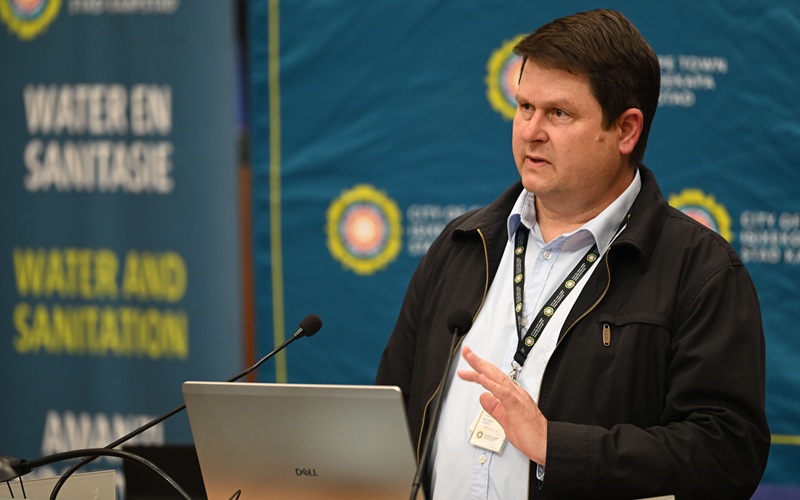
Caption 1: Sven Sötemann, Manager: Wastewater Treatment Branch in the City’s Water and Sanitation Directorate, provides an update on the City’s marine outfalls permit requirements.
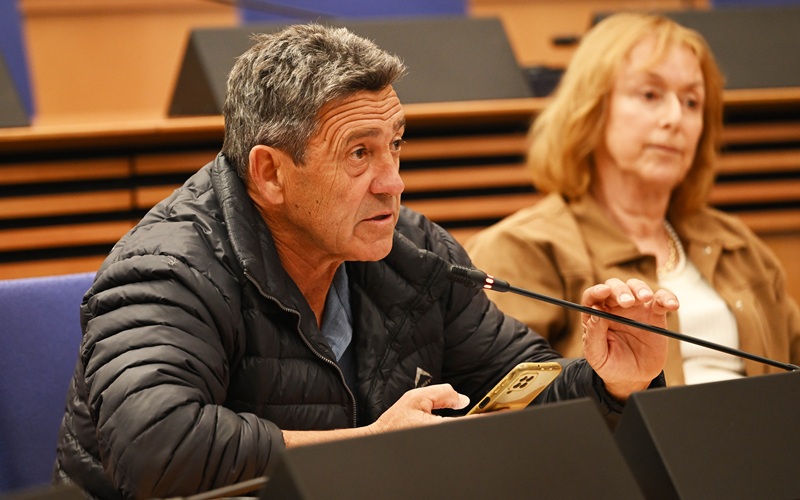
Caption 2: Section 80 Advisory Committee members Paul Moxley (left) and Caroline Marx (right) engaging with presenters during the Permit Advisory Forum.
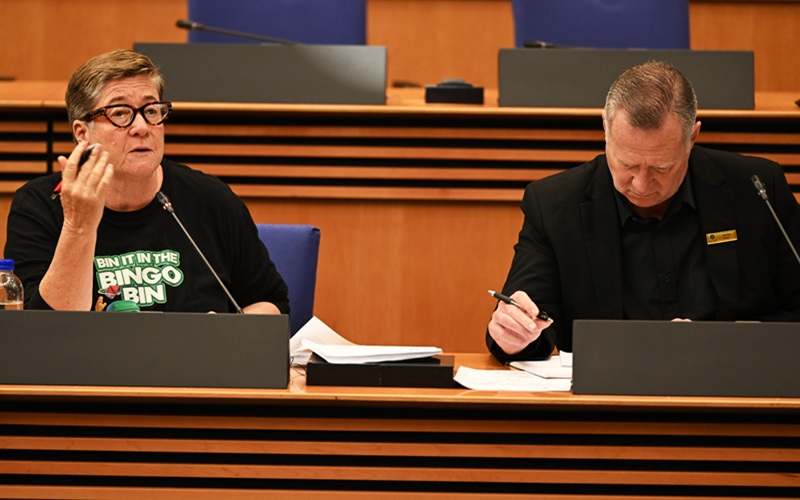
Caption 3: Councillor Carolynne Franklin (left) officiated the Permit Advisory Forum meeting as Acting Chairperson. Right: Councillor Karl Bodin.