

Municipalities must be at the centre of South Africa's circular economy
11 August 2026
STATEMENT BY THE MAYORAL COMMITTEE MEMBER FOR URBAN WASTE MANAGEMENT, ALDERMAN GRANT TWIGG
The nationally implemented Extended Producer Responsibility (EPR) is expected to play an increasingly important role in reducing waste at source by requiring producers to take greater responsibility for the design, collection, reuse, recycling and end-of-life management of products and packaging.
While the theme of the conference speaks about shared impact, we cannot achieve it without recognising the central role municipalities play in South Africa's waste management system. Every day, municipalities collect waste, operate landfill sites, manage collection fleets, maintain infrastructure and remain accountable to residents for delivering these essential services.
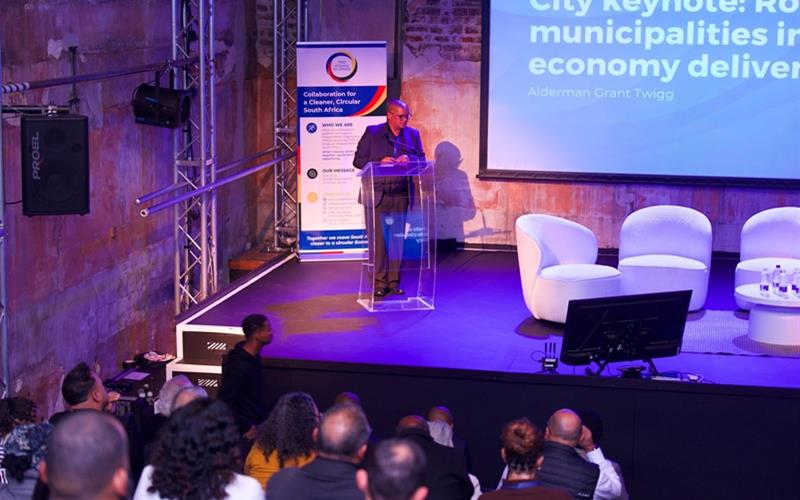
Alderman Grant Twigg, the City’s Mayoral Committee Member for Urban
Waste Management, addresses the audience at the PASA EPR 2030 Conference
Municipalities carry the operational responsibility for waste management and should be included in key planning, funding and decision-making processes.
As municipalities continue investing in recycling infrastructure, expanding separation-at-source programmes and improving collection services, the current EPR system still presents significant challenges. Funding does not consistently reach municipalities, planning often takes place without meaningful municipal participation, and fragmented reporting makes it difficult to accurately measure the impact of recycling efforts across the country.
To strengthen South Africa's circular economy, I believe municipalities must have a permanent seat at the table when national EPR targets, infrastructure plans and investment decisions are made. We also need predictable, multi-year funding for municipal collection infrastructure, a shared and independently verified national data system, greater recognition of the informal waste reclaimer economy, and stronger alignment between municipal by-laws and national EPR regulations.
I also called on Producer Responsibility Organisations to move beyond compliance and become genuine investment partners in municipal waste infrastructure.
There is no circular economy without collection. There is no collection at scale without municipal infrastructure. And there is no sustainable municipal infrastructure without PROs working alongside municipalities as co-investors and co-planners.
The City of Cape Town has made significant progress in expanding separation-at-source programmes, investing in recycling infrastructure and integrating waste reclaimers into the waste management system. We remain committed to sharing our experience and working with national government, industry and municipalities across South Africa to build a stronger and more effective circular economy.
If we are to move from fragmentation to shared impact, we must build partnerships that recognise municipalities as equal partners from the outset. The City of Cape Town stands ready to play its part in creating a more collaborative, better coordinated and more sustainable waste management system for South Africa.