
Smarter marketing and stronger connectivity key to tourism growth
01 September 2026
As Tourism Month gets under way, the City of Cape Town is sharpening its approach to tourism by placing greater emphasis on digital innovation, international connectivity and turning destination marketing into measurable demand and economic growth.
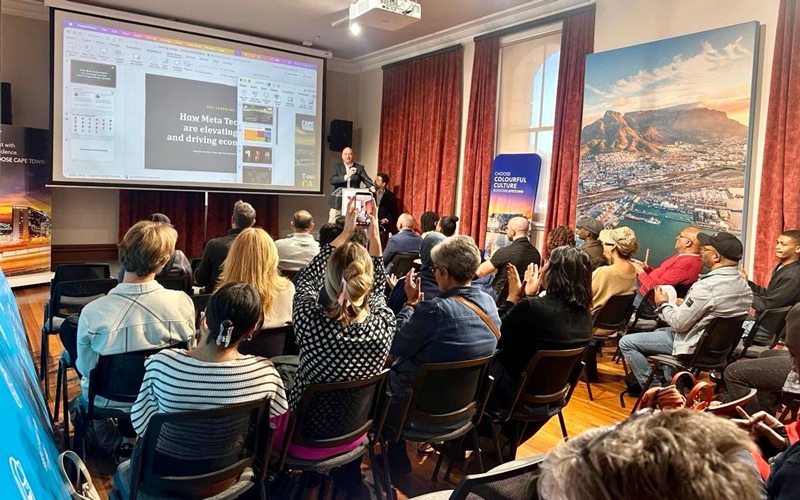
The City’s Tourism and Place Marketing Branch in the Economic Growth Directorate, in collaboration with Meta, recently hosted a Learning Lounge knowledge-sharing session at the Invest Cape Town Centre at City Hall.
The Learning Lounge is a knowledge-sharing initiative designed to facilitate the exchange of insights, expertise and industry developments. The most recent session focused specifically on “How meta technologies are elevating tourism and driving economic growth”.
The session brought tourism operators and industry experts together to explore how technologies such as artificial intelligence and Meta’s digital platforms are changing the way destinations market themselves and connect with visitors.
‘Government doesn’t have all the answers. That’s why I want to get the right experts and industry specialists into the room, people who understand this sector inside out, so that we can learn from what is happening on the ground and make better decisions. The City’s approach to destination marketing is increasingly focused on converting interest into actual economic activity.
‘My philosophy is very simple: marketing must be backed up by conversion. It’s great if somebody sees a beautiful Cape Town video and gives it a like. But I would much rather they see it, click on it, book a flight, book a hotel and actually come here,’ said Alderman Vos.
He highlighted the City’s international This Is Cape Town campaign, which reached 55 cities across six continents and generated 250 million impressions across Meta platforms. India accounted for almost 109 million impressions, Africa nearly 42 million and South America around 25 million.
Alderman Vos said that this data provides the City with a clearer understanding of where interest in Cape Town is coming from, allowing future campaigns to be more targeted and responsive to market demand.
New campaigns will focus on families, Cape Town’s markets and winter tourism, with the latter forming part of the City’s efforts to reduce seasonality and position Cape Town as a year-round destination.
Connectivity remains another major focus. Cape Town now has direct international links to 31 destinations, with increased capacity on routes including Dubai, Doha, Istanbul, London and São Paulo.
‘For me, landing another flight in Cape Town is one of the clearest signs that we are succeeding as a destination.
‘The City will continue pursuing opportunities in key growth markets, such as India and China, while strengthening Cape Town’s connectivity across Africa, Europe, North America and South America,’ said Alderman Vos.
However, Alderman Vos emphasised that attracting more visitors is only one part of growing the tourism economy. The City’s Tourism Strategy is currently being finalised, with input required from departments responsible for transport, safety and security, coastal management and community services.
‘Tourism doesn’t exist in isolation. The things that make Cape Town a great place to live are very often the same things that make it a great place to visit,’ said Alderman Vos.
The City recorded around 2,8 million overnight visitors last year, with tourism contributing approximately R24,5 billion to the local economy and supporting around 106 000 jobs.
The City has set an ambition to grow overnight visitors beyond five million, increase tourism’s economic contribution beyond R30 billion and move tourism employment towards 200 000 jobs.
‘Those are big targets, but I don’t think they are unrealistic. We have the people. We have the places. We have the products. We have the connectivity. And we have an industry that has shown enormous resilience and creativity,’ said Alderman Vos.
Looking ahead, he said the next phase of tourism growth would require even closer collaboration between government and the private sector.
‘Our job is to create the conditions for growth, listen to the people who understand the market, and make sure that when our marketing creates demand, the destination is ready to deliver,’ said Alderman Vos.
End